

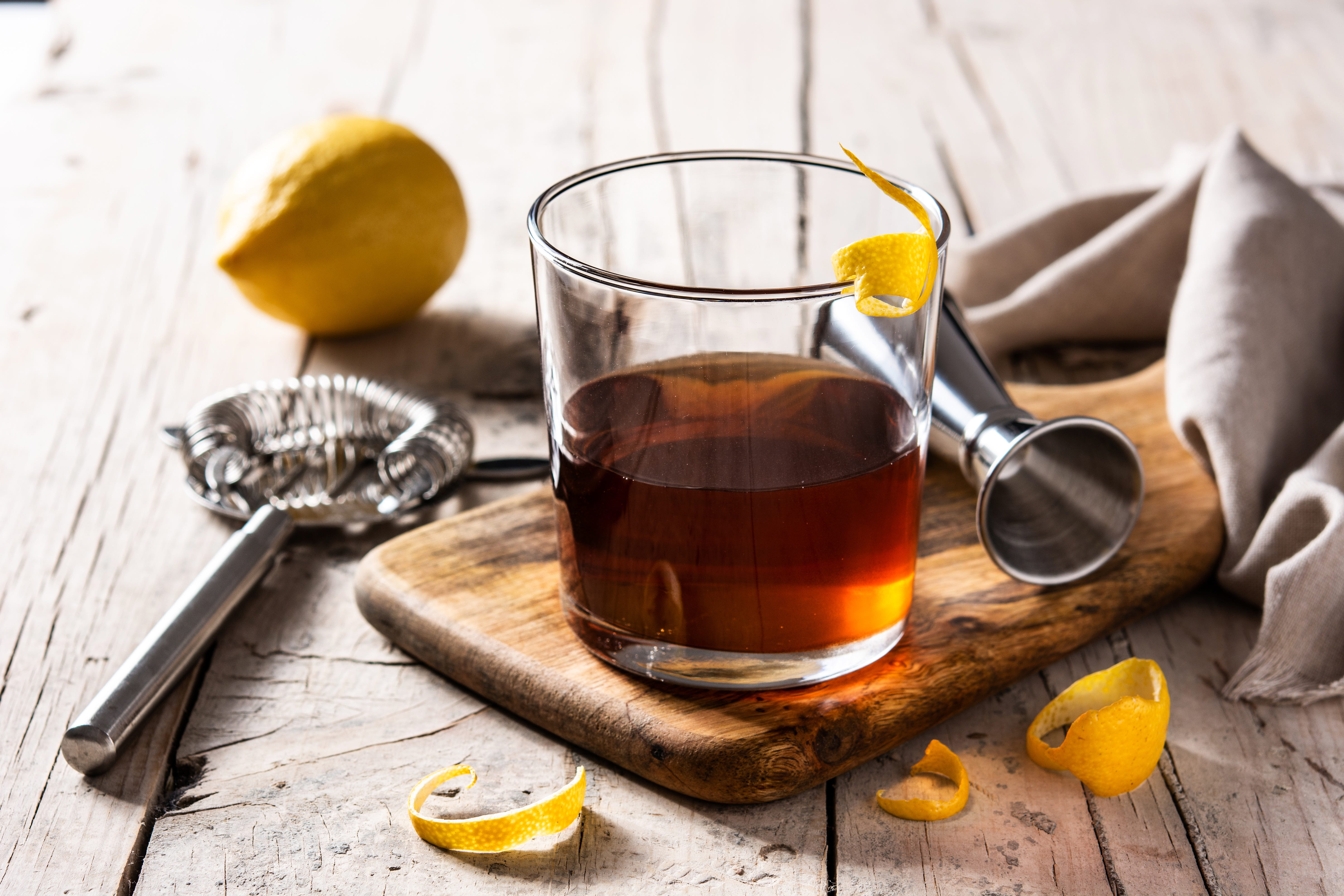
The South understands contrast. Sudden cold snaps, heavy heat, and everything in between. Its drinks evolved to meet those moments, offering warmth when needed and composure when the air turned thick. Few cocktails reflect that balance better than the Sazerac, a drink inseparable from the rhythm and history of New Orleans.
First mixed in 1838 by apothecary Antoine Peychaud, the original Sazerac began as a brandy-based drink sweetened with sugar and bitters. Over time, whiskey took its place, absinthe entered the ritual, and the drink became one of the most recognizable cocktails in American history.
This alcohol-free Sazerac honors that lineage without insisting on alcohol as the price of admission. It keeps the structure, the aromatics, and the deliberate pace that made the original endure.
Alcohol-Free Sazerac Recipe
Ingredients
1½ ounces non-alcoholic whiskey
¼ ounce absinthe or alcohol-free absinthe alternative
3 dashes Peychaud’s-style bitters or alcohol-free bitters
1 sugar cube
A few drops of water
Lemon peel, for garnish
How to Make an Alcohol-Free Sazerac
Begin by chilling a lowball glass. Add a small amount of absinthe and gently rotate the glass to coat the interior. Discard any excess and set the glass aside.
In a separate mixing glass, add the sugar cube, bitters, and a few drops of water. Muddle until the sugar dissolves. Add the non-alcoholic whiskey and ice, then stir until fully chilled.
Strain into the prepared glass. Express a lemon peel over the surface of the drink and drop it in to garnish.
A note on absinthe
“Mocktail” does not have to mean rigid or absolute. Traditionally, absinthe was added to the Sazerac later in its history, then removed when it was banned, with bitters stepping in to carry the flavor forward.
Today, you have options. A light absinthe rinse adds aroma and history. Leaving it out creates a fully alcohol-free drink that is still faithful to tradition. Both approaches are valid. Choose what fits your moment.
Why this belongs in Cr(af)t
The Sazerac was never about excess. It was about intention, restraint, and balance. Making it alcohol-free does not diminish its character. It clarifies it.
This version invites you to enjoy the ritual, the history, and the craftsmanship without sacrificing clarity or presence. It is a way of honoring where the drink came from while choosing what serves you now.
If this approach resonates, subscribe to Cr(af)t for more alcohol-free recipes rooted in craft, history, and thoughtful choice.